
How to Clean a Glass Pipe: A Complete Step-by-Step Guide

A clean glass pipe tastes better, hits smoother, and lasts a lot longer. Yet cleaning is the step most people put off — until sticky resin, cloudy glass, and stale flavor make it impossible to ignore. The good news: learning how to clean a glass pipe takes about ten minutes, a handful of household supplies, and no special skills.
This guide walks through three tried-and-true methods, when to use each one, and the small habits that keep your piece looking (and hitting) like it did the day you unwrapped it.
Why a clean glass pipe matters
Resin buildup does more than look unappealing. It restricts airflow, muddies the taste of dry herb, and traps bacteria and combustion byproducts you don't want to inhale. A regular cleaning routine solves all three at once and keeps the glass structurally sound for years.
Bonus: a clean piece is easier to inspect. You'll spot small cracks, chips, or worn joints before they turn into a broken bowl.
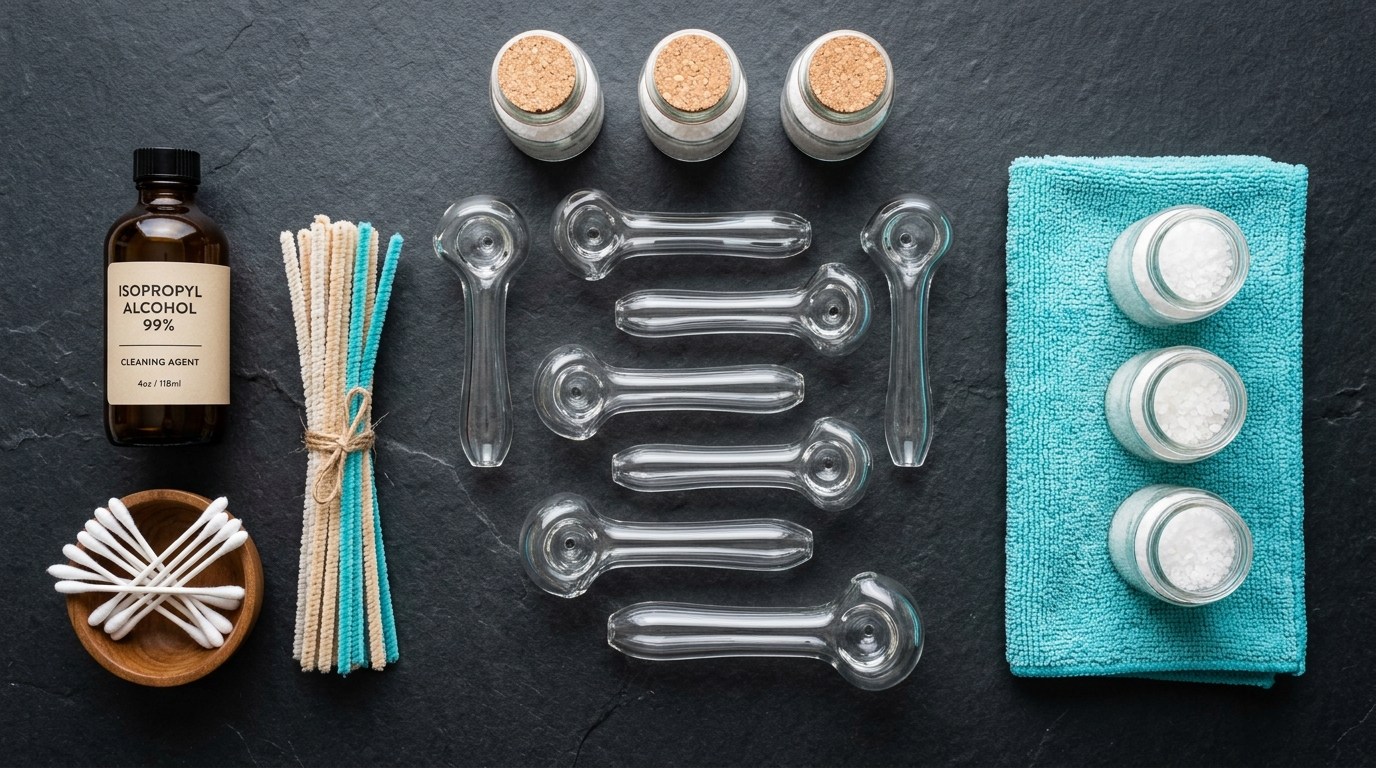
What you'll need
- Isopropyl alcohol — 91% or 99% works best
- Coarse sea salt or Epsom salt (the abrasive)
- A resealable zip-top bag or a small glass jar with a lid
- Cotton swabs and pipe cleaners
- Warm water for rinsing
- A soft cloth for drying
- Rubber gloves (optional, but nice)
Method 1: Salt and isopropyl alcohol (the classic)
This is the fastest, cheapest, and most reliable way to clean a glass pipe. It works on hand pipes, spoons, one-hitters, and most small glass pieces.
- Empty the bowl. Tap out any loose ash and use a pipe cleaner to sweep the airway.
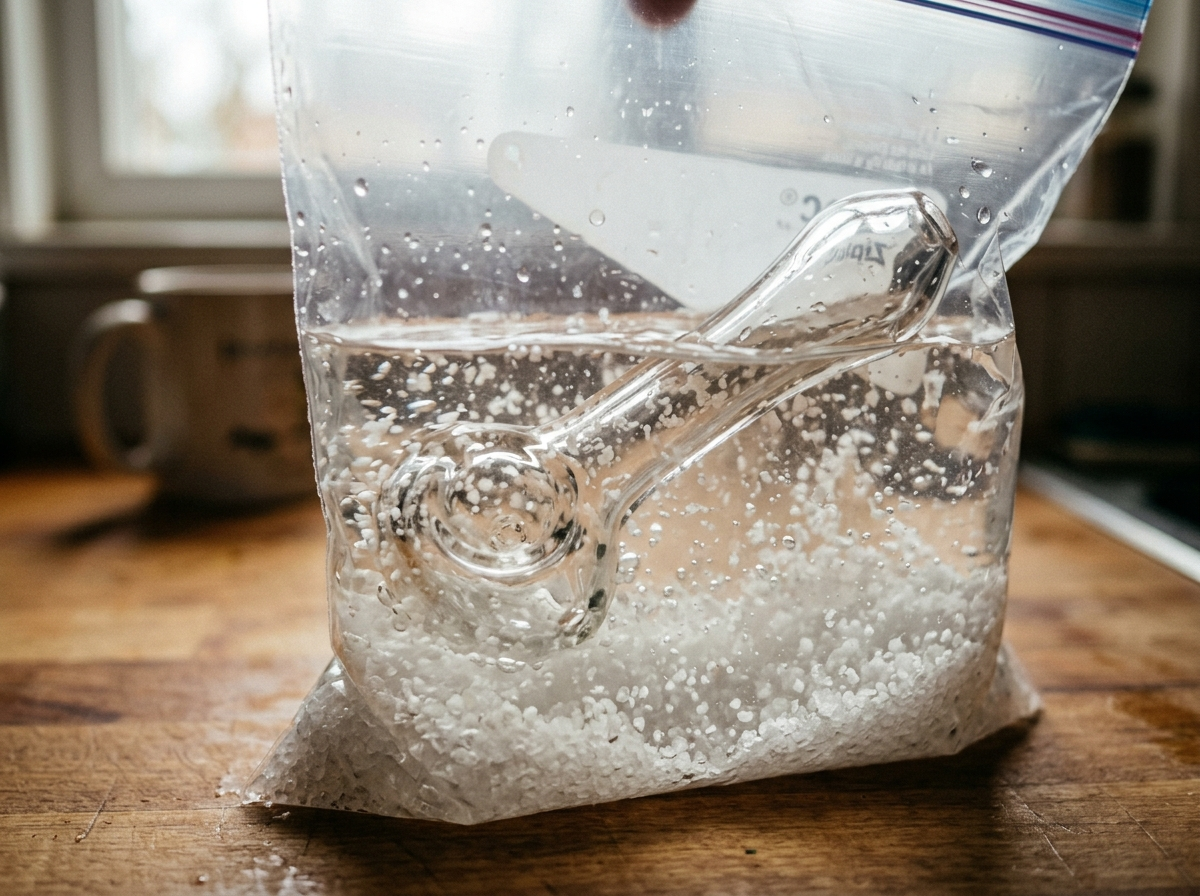
- Bag it. Place the pipe in a zip-top bag and add a generous tablespoon of coarse salt.
- Add alcohol. Pour in enough 91% isopropyl to fully submerge the piece. Seal the bag, squeezing out excess air.
- Shake gently. Agitate the bag for 60 to 90 seconds. The salt acts as a scrubber, breaking loose the resin the alcohol is dissolving.
- Let it soak. Set the bag aside for 20 to 30 minutes. For heavy buildup, let it sit up to a few hours.
- Rinse thoroughly. Run hot water through and around the pipe until every trace of alcohol and salt is gone.
- Dry. Pat with a soft cloth and let it air dry before using again.
Method 2: Boiling water (for stubborn buildup)
If a piece has months of neglect on it, alcohol alone may not cut it. Boiling water loosens hardened resin so the alcohol soak can finish the job.
- Place the pipe in a pot of cold water and slowly bring it to a simmer. Never drop cold glass into hot water — the thermal shock will crack it.
- Simmer for 20 to 30 minutes.
- Carefully remove with tongs, let it cool to room temperature, and follow with the salt-and-alcohol method above.
This combo will handle almost any level of buildup.
Method 3: Denture tablets or vinegar (the gentle route)
Prefer something without a strong smell? Two low-effort alternatives:
- Denture tablets: Drop the pipe into a bowl of warm water with two or three tablets. The effervescent cleaner lifts light resin over an hour or two.
- White vinegar and baking soda: Soak in vinegar, then rinse with a baking-soda paste and warm water. Works well for lightly used pieces.
These are slower than the alcohol method but great for maintenance cleans or if you're sensitive to isopropyl fumes.
How often should you clean a glass pipe?
A good rule of thumb:
- Quick wipe after each session — swab the bowl with a dry cotton swab while it's still warm.
- Light clean weekly — a two-minute alcohol swab through the bowl and airway.
- Deep clean every 2 to 4 weeks — the full salt-and-alcohol soak described above.
Frequent light cleaning beats occasional deep scrubbing, both for flavor and for the life of your glass.
Common mistakes to avoid
- Skipping the rinse. Trace isopropyl left inside the pipe is harsh on the lungs.
- Using metal picks aggressively. Scratched interior glass is where residue latches on next time.
- Cleaning cold glass with hot water. Always warm gradually.
- Storing wet. Trapped moisture invites mold in the airway. Air dry fully before putting the piece away.
The easy-clean upgrade
If cleaning is the part you always dread, consider a piece designed to make it painless. Our EZ Clean hand pipes use a modular bowl and airway that comes apart in seconds, so a quick swab replaces the full soak. It's the closest thing to a self-cleaning pipe on the market.
For anyone with a dab setup, the same principle applies to your rig. Take a look at our carb caps and quartz bangers — clean tools mean better flavor and longer-lasting glass.
Final thoughts
Learning how to clean a glass pipe well is one of those small skills that pays off every single session. Set aside ten minutes tonight, run the salt-and-alcohol method, and you'll be surprised how much brighter the flavor comes back.
A clean piece is a happy piece.


